
0
Home Occupational Therapy
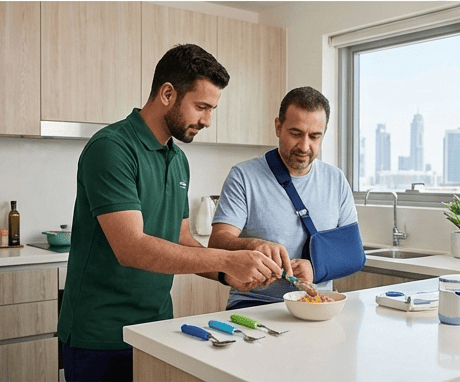
Home occupational therapy helps patients perform everyday activities with greater independence and safety by assessing functional, motor, cognitive, and self-care skills. At Taafaa, the process starts by identifying the tasks that are difficult for the patient, then building a rehabilitation plan around practical goals that can be followed and adjusted as progress develops.
- Functional assessment of movement and daily living skills
- Training for self-care and independent daily activities
- Functional rehabilitation after injury and neurological conditions
- Activities targeting motor coordination and cognitive skills
- Home and task adaptations to reduce barriers to daily performance
Why choose Taafaa for occupational therapy?
1
Assessment around daily life
- Identify the daily tasks that are difficult for the patient
- Observe movement, coordination, and skills needed for the target activity
- Translate assessment findings into clear, trackable functional goals
2
Goal-based rehabilitation
- Select activities according to the patient’s current ability and needs
- Focus on self-care, movement, and practical daily tasks
- Progress the level of training according to response and functional change
3
Care in the patient’s environment
- Practice skills in the environment where the patient actually performs them
- Identify home barriers that may affect safety and independence
- Guide family members on supporting participation without unnecessary dependence
4
Ongoing functional review
- Review performance against the goals set for the plan
- Adjust activities when difficulty or functional ability changes
- Reinforce acquired skills so they carry into the daily routine
The occupational therapy pathway from assessment to function
Occupational therapy starts by understanding the patient’s functional needs, then translating them into practical goals and graded training. The service therefore follows clear stages that can be reviewed and adjusted according to the patient’s response.
0
Daily-skill focus areas
0
Levels of progress review
0
Initial functional assessment
Frequently Asked Questions About Home Occupational Therapy
How are goals set for a home occupational therapy program?
The process starts by identifying the activities that are difficult for the patient, then setting functional goals linked to daily tasks. Activities are selected according to the patient’s current ability, and the plan can be reviewed as performance changes.
Which conditions may benefit from home occupational therapy?
Occupational therapy may support people whose movement, coordination, cognition, or ability to perform daily activities has been affected. This can include some post-injury, neurological, developmental, or functional difficulties. The initial assessment determines whether the service fits the case.
How can occupational therapy support recovery after stroke or neurological injury?
Rehabilitation focuses on the tasks affected by the condition, such as upper-limb use, self-care, transfers, movement around the home, or organizing activities. Priorities are based on the patient’s abilities and goals, with graded practice and progress review.
Which daily living skills can be trained during a home session?
Training may include dressing, eating, personal hygiene, using everyday tools, organizing tasks, and selected household activities according to the patient’s age and abilities. The focus is on meaningful tasks rather than applying the same program to every patient.
How is a child assessed before starting home occupational therapy?
The assessment considers age-related functional skills such as fine motor abilities, hand-eye coordination, self-care participation, play, and attention when relevant. Priorities are then selected according to the child’s abilities and the activities that need support.
How can the home environment be adapted for a patient with functional difficulties?
The therapist first identifies barriers that make a task harder or less safe, then considers practical changes to the space, tools, or way the activity is performed. The aim is to support participation and independence while matching the patient’s needs and family context.
How long does a session take, and what determines the number of sessions?
Session length and frequency are not identical for every case. They depend on the initial assessment, age, level of difficulty, functional goals, and response to rehabilitation. The plan is therefore set and reviewed according to actual need and progress.
What role does the family play in home occupational therapy?
Family members can help reinforce skills within the daily routine, prepare the environment, and follow agreed guidance safely. The therapist explains how to support participation without taking over tasks that the patient can still perform independently.
Book Home Occupational Therapy Start by identifying the patient’s functional needs and goals so the assessment and next steps can be coordinated
×
![QR Code]()